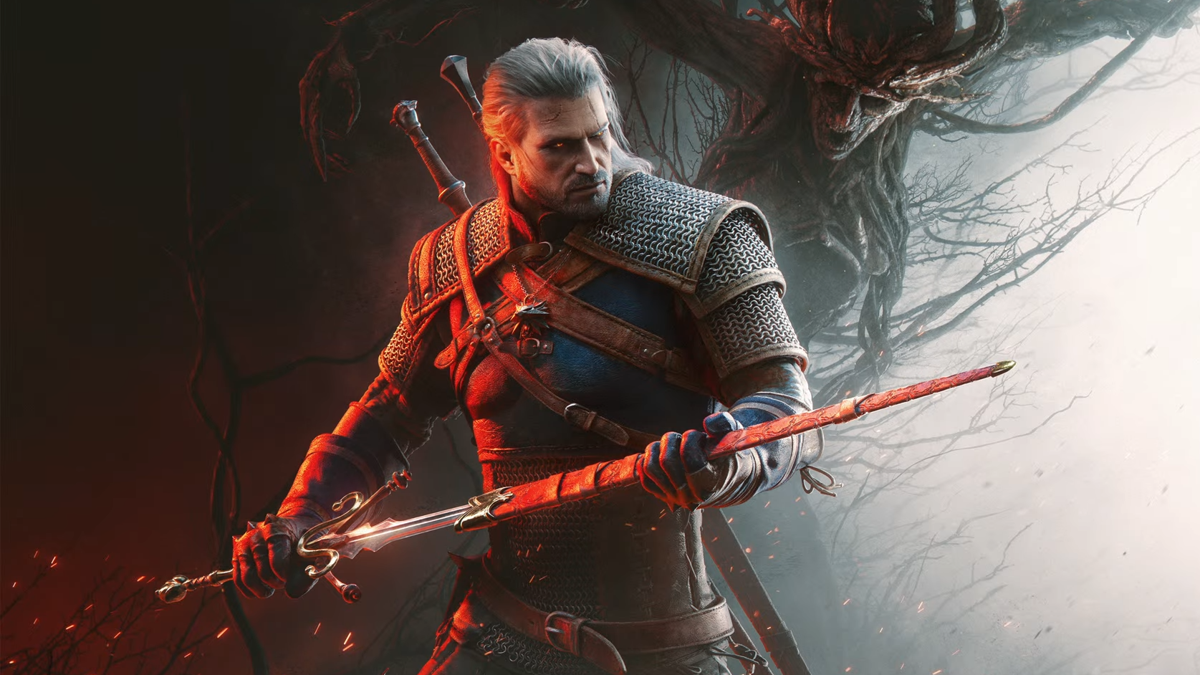
CD PROJEKT RED chose one of the biggest events on the gaming calendar to open up about two projects that have the The Witcher 3: Wild Hunt community buzzing. On one side, the remaster of the most awarded RPG of its generation, set to launch on September 29. On the other, Songs of the Past, a completely new expansion, expected in 2027.
A decade later, the same names
The detail that drew the most attention, however, wasn't in the trailers. Part of the original The Witcher 3 team has gone back to working together after about ten years, and the feeling described by those who experienced the reunion is less corporate and more heartfelt.
"It's like a school reunion," summarized one of the developers when commenting on the mood behind the scenes of the new project. The metaphor sets the tone for what the company wants to convey: this isn't just about reviving a billion-dollar franchise, but about bringing together the people who helped build a landmark of modern RPGs.
What is already known about the two releases
The remaster of The Witcher 3: Wild Hunt arrives on September 29, with the promise of reintroducing the game to a new generation of players and giving veterans a reason to revisit the Continent. Songs of the Past, meanwhile, is being treated as an all-new expansion, that is, new content rather than just a reworking of what already exists.
- The Witcher 3: Wild Hunt remaster — released on September 29
- Songs of the Past — brand-new expansion, expected in 2027
- Development — CD PROJEKT RED in partnership with the studio Fool's Theory
The voices behind the project
In a conversation with IGN Brasil, two central names on the project explained how the two fronts connect.
Miles Tost, level design lead at CD PROJEKT RED, is one of the professionals who has followed the series for years and knows up close the machinery that makes the RPG work. On the other side, Karolina Kuzia-Rokosz holds two weighty roles: she is creative vision director for Songs of the Past and also chief design director at Fool's Theory, the partner studio responsible for shaping the expansion.
The pairing of the Polish developer with an external studio is nothing new in the industry, but it draws attention when it involves such a sensitive intellectual property. The choice indicates that CD PROJEKT RED wants to keep creative control of the franchise without giving up teams that have already shown an affinity for the universe created by Andrzej Sapkowski.
Why this matters
The Witcher 3: Wild Hunt is frequently cited among the best RPGs ever made, with a legion of fans that remains active more than ten years after its original release. Every move the company makes around that legacy is watched under a magnifying glass — and with proportional expectations.
The September remaster works as a warm-up: it puts the game back on the shelves and back into the public conversation. Songs of the Past, in turn, is the long-term bet, with a debut planned for 2027 and the mission of proving that there is still a relevant story to tell in that world.
Between the nostalgia of a reunion and the pressure of repeating a success that is nearly impossible to replicate, CD PROJEKT RED is betting on something simple in theory and difficult in practice: bringing together those who know the way and letting the new content speak for itself.