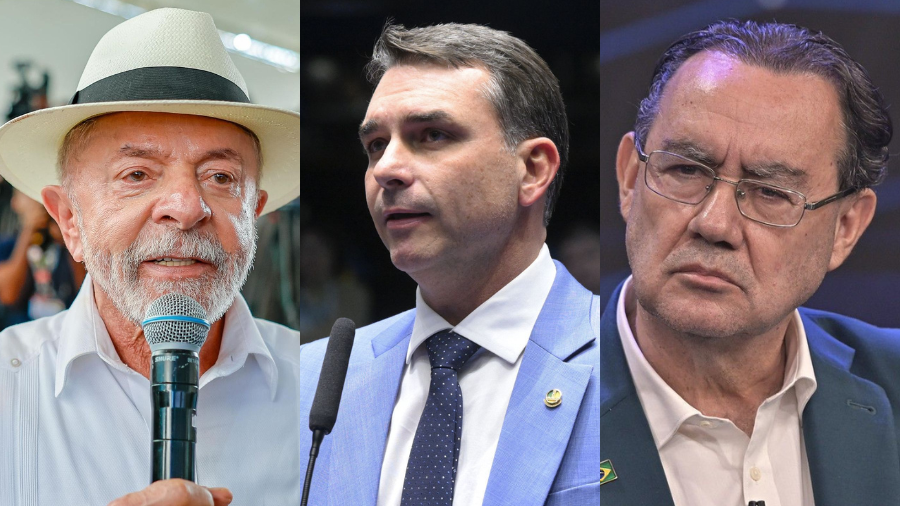
A new poll released this Monday (14) outlines the board of the 2026 presidential race. According to the Nexus/BTG survey, President Luiz Inácio Lula da Silva (PT), who is running for reelection, leads the first-round simulation with 40% of voting intentions.
Next comes candidate Flávio Bolsonaro, with 36%. Third place in the prompted scenario is Cury, with 7%.
The first-round picture
The numbers point to a duel concentrated at the top of the table, with Lula and Flávio Bolsonaro well ahead of the other names tested. Together, the top two absorb most of the electorate surveyed by the institute.
- Lula (PT): 40%
- Flávio Bolsonaro: 36%
- Cury: 7%
The gap between first and second place is four percentage points — a difference at the edge of the study's margin of error, reinforcing the reading of a competitive and still-open scenario.
How the poll was conducted
The Nexus survey, in partnership with BTG, interviewed 2,003 voters between Sept. 11 and 13. The margin of error is 2 percentage points, plus or minus.
This type of framing, known as a prompted scenario, presents respondents with a prior list of candidates — a tool that helps measure voting potential but tends to inflate voting intention for names already known to the public.
What the numbers indicate
The snapshot captured by the institute suggests a polarized election, but without a comfortable lead for either of the top two. In races with a margin of error this size, swings of a few points can reverse positions from one round to the next.
Cury's level, around 7%, also deserves attention: depending on how the race evolves and how well the electorate knows the name, this contingent could become decisive in any runoff.
What to watch going forward
Election polls work as snapshots of a moment, not as predictions of results. Four months before the official start of the 2026 election calendar, the electorate still tends to shift as candidates consolidate, economic news evolves and party alliances take shape.
That is why analysts' usual recommendation is to compare surveys from different institutes and track each one's historical series, rather than isolating a single number. Only repeated measurements over the coming months will make it possible to say whether the lead recorded now holds or whether the scenario becomes scrambled again.