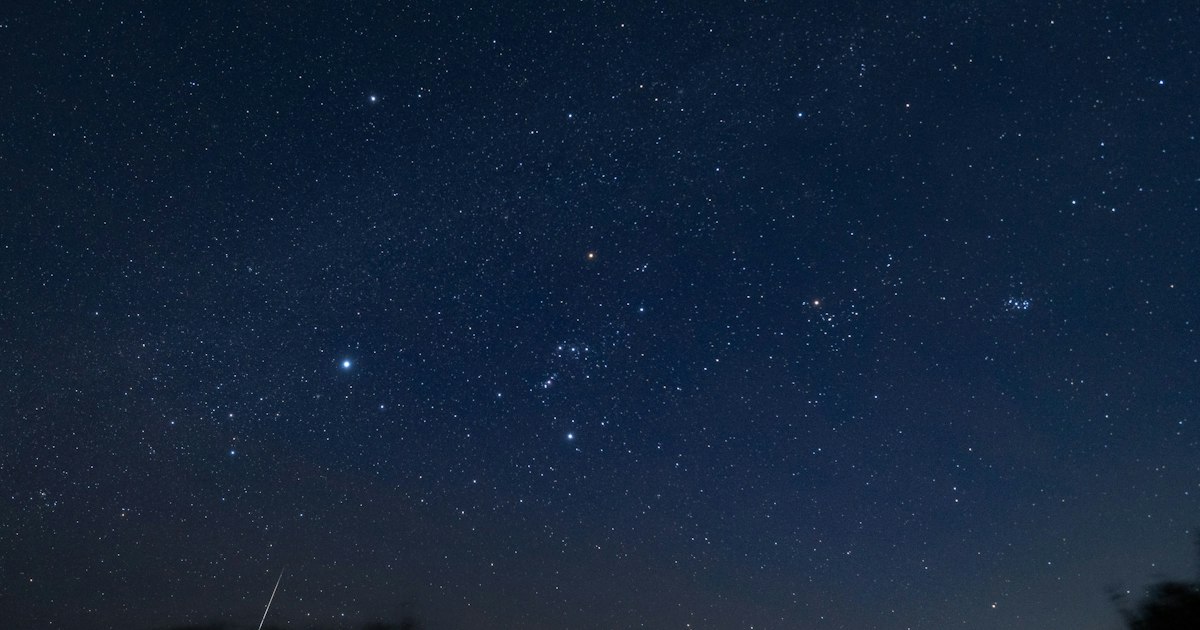
Grab your coat and escape light pollution
In October, it is worth staying up late to observe the sky. The Orionids return to cross the atmosphere, offering a natural spectacle that repeats every year.
Best dates for observation
The peak of the phenomenon occurs on October 21 and 22. With a dark location and patience, it is possible to record several shooting stars in an hour. The International Meteor Organization (IMO) estimates up to 20 meteors per hour under ideal conditions.
The moon as an obstacle
This year the natural satellite will be brighter near the peak, outshining the fainter meteors. Therefore, the number actually visible should fall below the theoretical maximum in most places.
After midnight the chances increase
No need to wake up early: conditions are more favorable for those observing late at night. The radiant of the Orionids lies in the constellation of Orion and rises in the sky during the early morning, improving visibility until dawn.
- Avoid staring directly at Orion
- Seek a clear horizon
- Move away from urban lights
Residents of large cities such as Vienna, Graz or Linz need to travel to rural areas for better results.
Origin of the celestial spectacle
Behind the meteors is the trail left by a famous comet, responsible for the material that burns in the atmosphere and creates the luminous streaks.