Tight race and technical tie on the radar
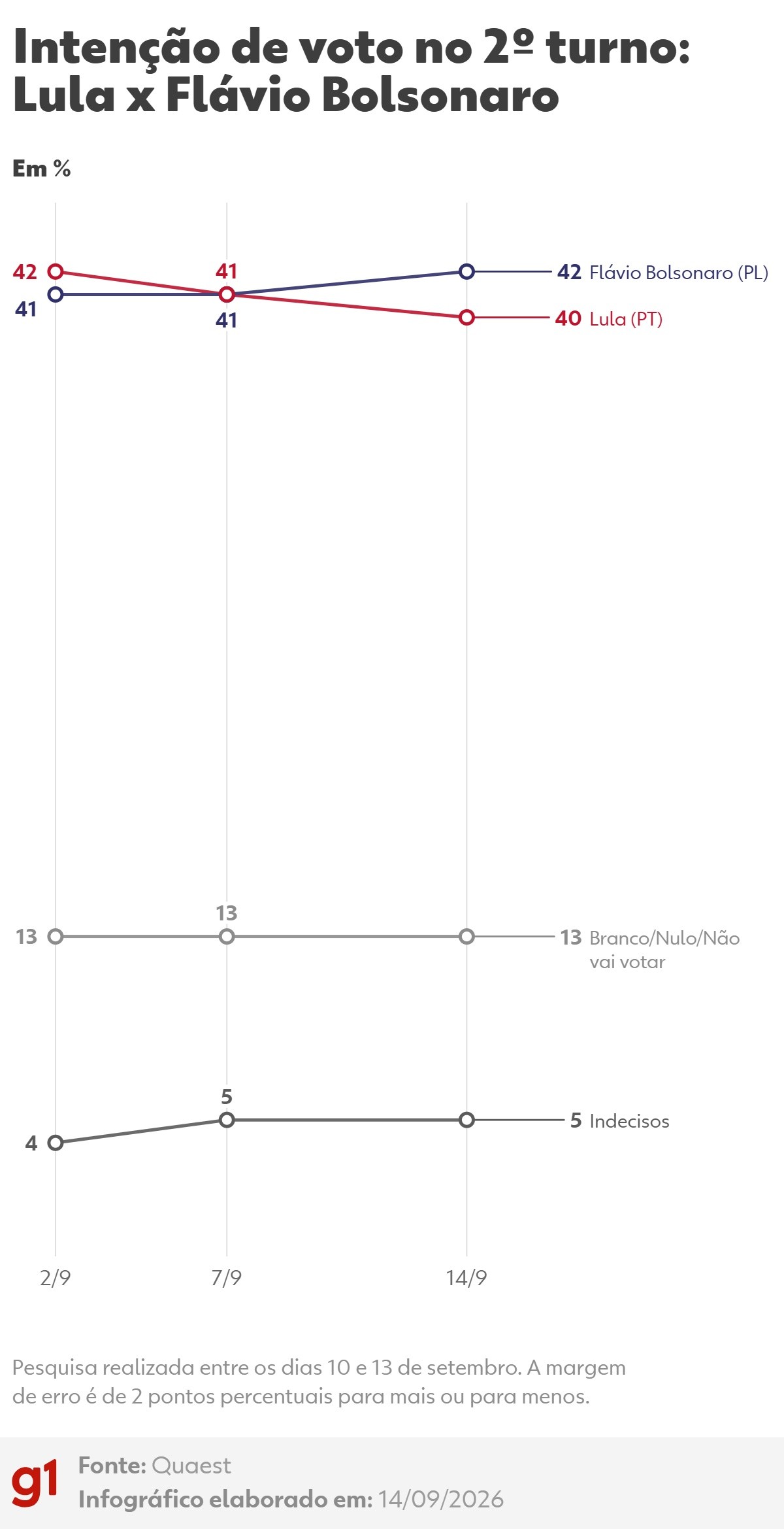
A new survey by the Quaest institute, released this Monday (14), placed Flávio Bolsonaro (PL) numerically ahead of Lula (PT) in a potential second-round runoff. The numbers show 42% for the senator and 40% for the current president, a two-percentage-point difference that constitutes a technical tie, since it falls within the poll's margin of error.
The study was commissioned by the newspaper O Globo and TV Globo, reinforcing the monitoring of the electoral landscape amid the movements of the pre-candidates.
A milestone in the historical series
The result draws attention for a relevant detail: it is the first time since April that Flávio Bolsonaro has appeared numerically ahead of Lula in the series of surveys conducted by Quaest. This shift, even if within the margin of error, signals an oscillation on the political board that had been monitored month by month by the institute.
The more cautious reading, however, avoids pointing to a consolidated turnaround. Since the distance between the two is within the statistical tolerance interval, the scenario remains one of technical equilibrium, in which any movement on either side can change the picture of the race.
What the numbers reveal
- Flávio Bolsonaro (PL): 42% of voting intentions in the second-round scenario.
- Lula (PT): 40% of voting intentions in the same scenario.
- Difference: 2 percentage points, within the margin of error.
- Statistical reading: technical tie between the two names.
- Time frame: Flávio's first numerical lead since April in the Quaest series.
Political context
The poll comes at a time of intense coordination among the country's main political forces. The closeness between the percentages reinforces the perception that the election is likely to be decided in the details and that the electorate remains divided between the two camps.
Experts often emphasize that fluctuations within the margin of error should not be interpreted as a definitive trend. Therefore, monitoring consecutive series of polls is considered more reliable than analyzing a single isolated survey.
Methodology and source
The survey was produced by the Quaest institute and released in partnership with the newspaper O Globo and TV Globo. The data presented are part of the second-round simulation, in which respondents choose between the two names placed head-to-head.
The release reinforces the importance of continuous monitoring of the electoral scenario, especially in such a tight race, in which each percentage point can represent a change in level in the race.