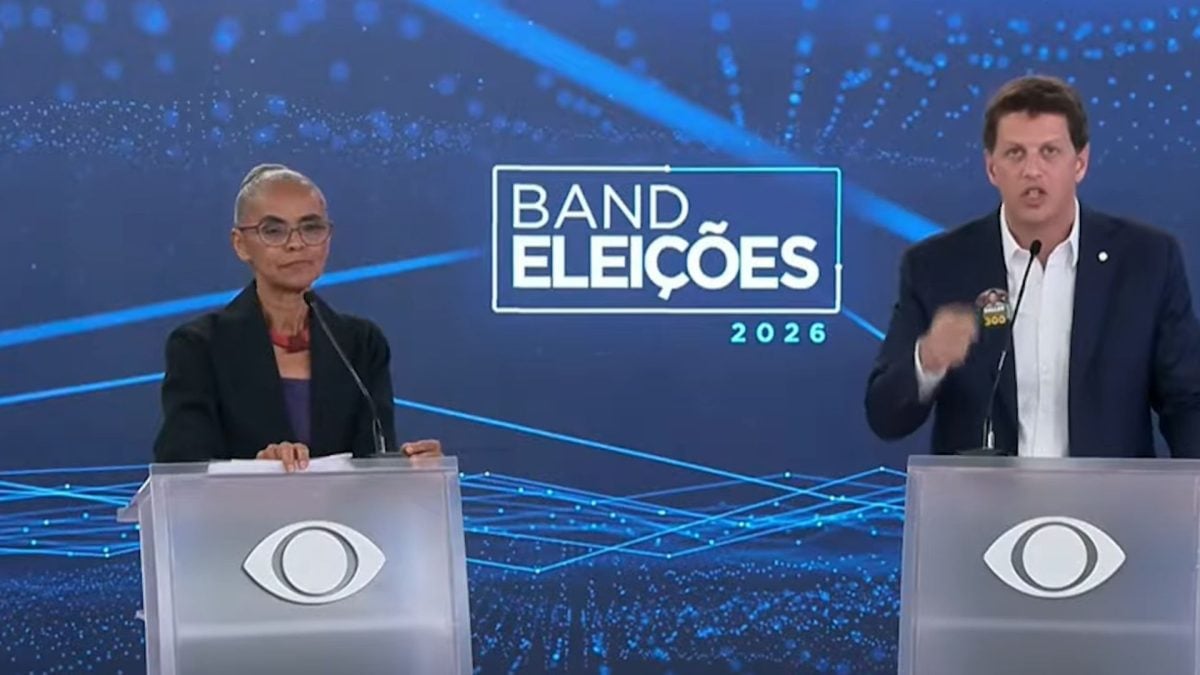
One debate, two worlds
The first direct clash between the Senate candidates for São Paulo brought less proposals and more friction to the table. During the debate held by Band on Wednesday night (9 Sep 2026), Ricardo Salles (Novo) chose as his preferred target the political origins of his two main rivals: Marina Silva (Rede) and Simone Tebet (PSB).
The argument of the former Environment Minister was direct: both had built electoral careers far from São Paulo territory — Marina in Acre, Tebet in Mato Grosso do Sul — and therefore knew little about the concrete demands of São Paulo's electorate.
Immediate reaction
The provocation did not go unanswered. Both candidates pushed back against the criticism and shifted the axis of the discussion to their management record and to the capacity for national articulation that, according to them, favors the state.
- Marina Silva recalled her work on environmental agendas of national scope and stated that the climate agenda is, today, inseparable from the São Paulo economy.
- Simone Tebet bet on the argument of administrative experience and said that a trajectory is not measured by ZIP code, but by results.
Salles, in turn, insisted that the race is statewide and that voters demand proximity, not a résumé built in other regions.
6x1 schedule sets the room alight
If the origin of the candidacies opened the confrontation, the proposal to scrap the 6x1 work schedule deepened the split. The theme dominated much of the block dedicated to economy and labor relations.
- One group defended the immediate end of the model, claiming a direct impact on workers' health and productivity.
- Another bloc preached caution, warning of the risk of cost inflation and unemployment in labor-intensive sectors, such as commerce and services.
The impasse revealed a division that is likely to run through the entire campaign: on one side, those who bet on regulation as a driver of quality of life; on the other, those who fear the side effect on job creation.
Supreme Court, security and the Banco Master case
The role of the Supreme Federal Court (STF) appeared as the third point of friction. Some defended the need to contain what they called judicial activism, while others maintained that the Court is the guardian of the democratic pact.
On public security, the disagreements followed the same pattern: proposals for tougher penalties and expanded armament clashed with theses of investment in police intelligence and prevention policies.
The case involving Banco Master entered the final stretch and became a credibility test. The candidates were pressed to explain their positions on oversight of the financial system, accountability of managers and the role of the Central Bank in supervising institutions in crisis.
What remains from the encounter
Even without direct confrontation among all the names in every block, the format made clear what the tone of the dispute in São Paulo will be:
- Identity and territory as a rhetorical weapon;
- Work and income as the economic battlefield;
- Institutions and security as the thermometer of the political field;
- Financial regulation as proof of technical seriousness.
The election for the Senate in the country's most populous state tends to serve as a national showcase. If the Band debate was a sample, the São Paulo campaign will be less about detailed proposals and more about each candidate's ability to translate for the São Paulo voter — born in São Paulo or not — what is at stake in Brasília.