Platforms under pressure
Criminals are exploiting TikTok as an entry point to commercialize child sexual abuse content. They post apparently harmless videos and insert comments with codes that lead interested parties to Telegram, where the material is offered in packages.
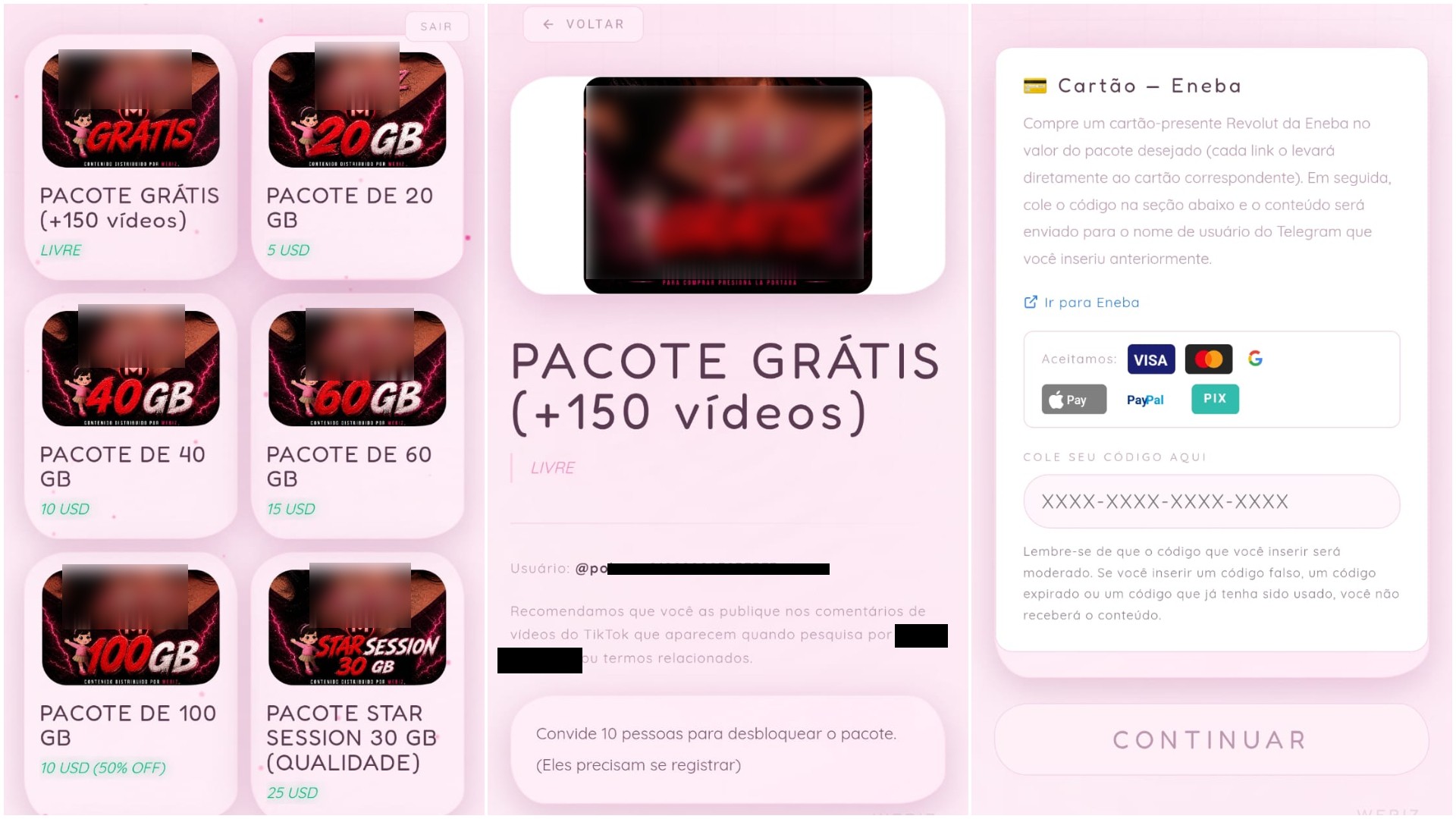
The g1 monitored more than 30 profiles for weeks and found that negotiations take place in private conversations, through bots or mini-applications within Telegram. Prices start at R$ 10, paid via PIX or digital currencies like bitcoin.
Disclosure strategies
The videos range from clips unrelated to the topic to content generated by artificial intelligence. The common point is comments full of codes that redirect to channels or groups on Telegram. In some cases, buyers themselves are encouraged to share links in exchange for free access.
Most of the monitored comments were in Spanish, but there were many in Portuguese. Location estimates point to profiles in Europe, especially Spain, Portugal and Poland.
Payments and categories
On Telegram, sellers offer free samples before the transaction. Packages range from 3 GB to 15 GB, with prices between R$ 10 and R$ 35. Some offers reach US$ 25 (about R$ 130) for access to thousands of files. Categories include material with sexual violence.
The Federal Police warns that the use of PIX does not guarantee anonymity: transactions leave traces that can identify buyers, and straw accounts are usually blocked.
Changes in legislation
Since August 2026, a new law sanctioned by President Luiz Inácio Lula da Silva increased penalties. Producing or selling this type of content can now result in 4 to 10 years of imprisonment. Those who acquire or keep the material face 3 to 6 years. The rule also covers AI-generated content.
Response from companies
Telegram stated it has removed more than 339 thousand groups and channels related to the topic in 2026. TikTok guarantees quick removal and account banning, with 99.8% of violating content detected proactively. Meta, owner of Instagram, said it employs technology to identify violations, although similar searches on Instagram did not return equivalent results.
Experts from the Alana Institute and SaferNet Brasil reinforce that both creators and platforms can be held responsible based on the ECA and the Constitution.