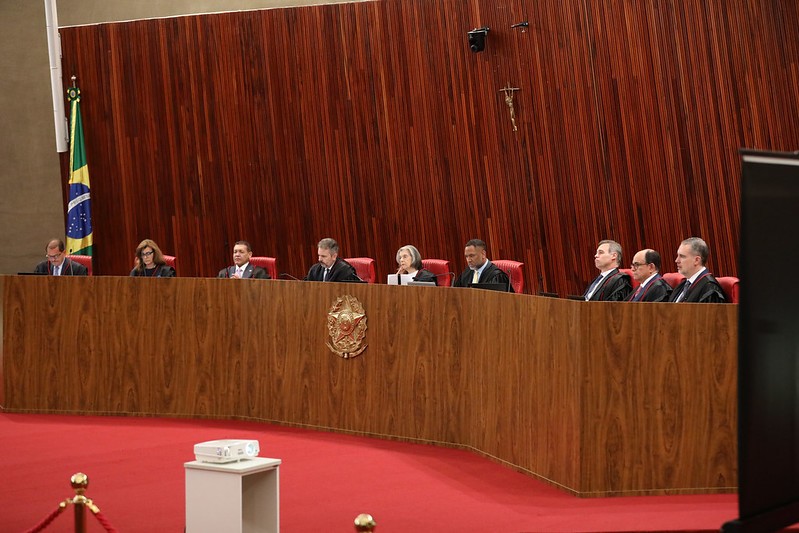
Minister André Mendonça, of the Superior Electoral Court, cast a favorable vote for the removal of publications spreading false allegations involving senator Flávio Bolsonaro and a bill archived almost two decades ago.
Virtual Plenary Decision
The judgment continues in a virtual environment and still awaits statements from the other six members of the Court. Mendonça clarified that the measure does not represent prior censorship, limiting itself only to contents that present as fact the participation of the candidate or his family in the attempt to remove the title of patron saint of Brazil from Our Lady of Aparecida.
Limits of the Order
In the vote, the minister emphasized that platforms must remove only posts that concretely claim that Flávio Bolsonaro or relatives “proposed, supported or intend to promote” the change. Criticisms, opinions and expressions of faith remain protected.
- No suspension of profiles or channels
- Doubts should favor keeping the content
- Religious freedom is not under discussion
Rebuttal to Divergences
Mendonça indirectly responded to minister Flávio Dino, who had restored the posts, and cited the position of minister Luiz Fux, who upheld the original TSE determination. According to him, confusing the removal of false information with restriction on faith inverts the meaning of the decision.
Origin of the Controversy
The case gained momentum after a comedian published content associating the Bolsonaro family with the old project. Flávio Bolsonaro’s campaign turned to the Electoral Court, generating initial removal orders. Dino suspended part of the measure, while Fux ordered immediate compliance, bringing the discussion to the Supreme Court plenary.
Next Steps
The TSE panel, still composed of ministers Dias Toffoli, Ricardo Villas Bôas Cueva, Sebastião dos Reis Júnior, Floriano de Azevedo Marques and Estela Aranha, is expected to conclude the analysis. The controversy may also return to the STF to define limits on the action of the Electoral Court and digital platforms.